

Lee Maracle’s Conversations with Canadians (2017)

2018-09-17T18:56:43-04:00

It’s such a perfect way to begin the book, inviting readers to imagine sitting at a kitchen table with Sto:lo author, Lee Maracle. And because it is inspired by the recurring conversations which she has had, over the years, with Canadians, this motif is not only welcoming but also

Lee Maracle’s Conversations with Canadians (2017)2018-09-17T18:56:43-04:00

Mazo de la Roche’s Finch’s Fortune (1955)

2024-07-19T11:08:33-04:00

“With her book, her roses and her cake she was separated from the other members of the family in a kind of frosty seclusion.” Alayne’s frosty seclusion doesn’t sound all that bad, does it? But the point is that Alayne feels her separateness. And that's not always comfortable. Nor

Mazo de la Roche’s Finch’s Fortune (1955)2024-07-19T11:08:33-04:00

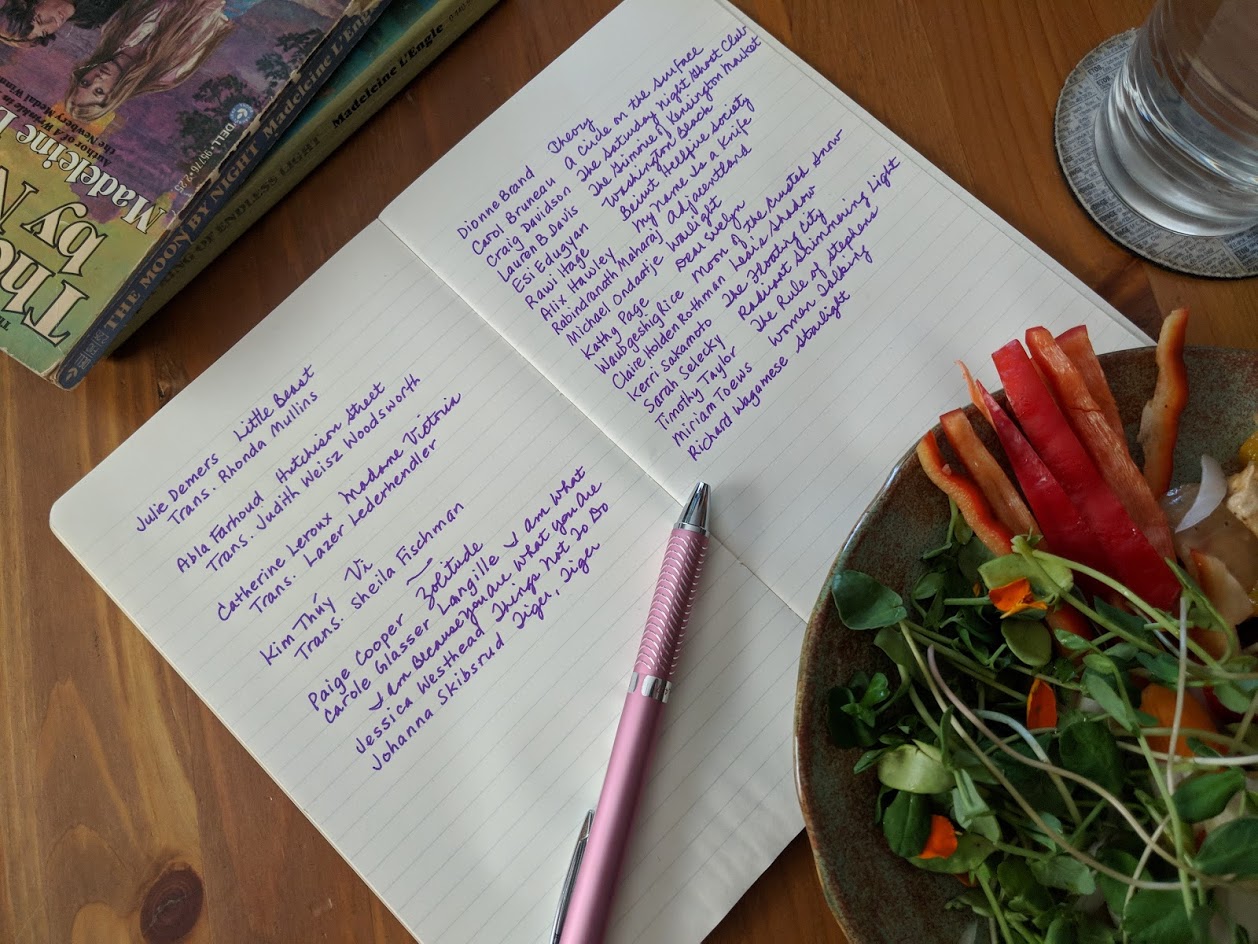
Into September 2018, In My Notebook: The NitGrit of CanLit

2019-04-26T17:01:04-04:00

I've worked in a bookstore twice in my life. Between those jobs, the Giller Prize burst onto the Canadian literary scene, in 1994. So when Bonnie Burnard's Casino and Other Stories and Eliza Clark's What You Need were shortlisted that first year, I was still fresh from the store, still returning weekly

Into September 2018, In My Notebook: The NitGrit of CanLit2019-04-26T17:01:04-04:00

Mavis Gallant’s “New Year’s Eve” (1970)

2018-08-27T10:32:51-04:00

Amabel is just a few years older than young Shirley, who lost her young husband Pete when they were newlyweds in “The Accident”; barely married, not yet disappointed. Had Amabel and Shirley been friends, able to discuss their brief experiences of married life, I wonder how their opinions might

Mavis Gallant’s “New Year’s Eve” (1970)2018-08-27T10:32:51-04:00

Mavis Gallant’s “The Prodigal Parent” (1969)

2018-08-27T09:11:40-04:00

Like the sand dollar that Rhoda’s father slips into his pocket, this is a gritty story. Her sister Joanne repatriated their father, with an air passage to back the claim, and now he has come to live with Joanne. “Then waja come here for?” “Because Regan sent me on

Mavis Gallant’s “The Prodigal Parent” (1969)2018-08-27T09:11:40-04:00
Go to Top